AI · 2 min read
AI Startup Branding: Make a Specific Promise, Not More Hype
Position an AI startup around a real customer task, supportable claims and a distinctive identity instead of generic AI-powered messaging.

Define which kind of AI branding you mean
AI branding can mean using AI to create design assets or building an identity for an AI product. This guide concerns the second: positioning an AI startup so customers understand its offer. Start with a specific customer and task, not the technology label. A tool for preparing support replies and a tool for analysing research documents solve different problems even if both use language models. Your brand should make that difference visible before visitors compare feature lists.
Write a promise that can be demonstrated
Use a simple structure: we help this audience complete this task with this useful outcome. Avoid claiming a universal productivity improvement unless you can substantiate it. Explain what information the product needs and what a person still reviews. Collect representative examples from the real product with permission to show them. If a demonstration is edited or simulated, label it honestly. A supportable promise gives the visual identity something concrete to communicate.
Distinguish capability from brand personality
An AI product can sound friendly without pretending to understand everything. Decide the brand's personality separately from its technical claims. Write examples of the voice in a headline, an onboarding message and a difficult support reply. Avoid switching from calm product language to exaggerated launch copy. USC Annenberg's discussion of AI brands argues for human-centred communication; use that as a prompt to describe the practical benefit and limitations rather than leading every sentence with AI.
Choose visual cues tied to your offer
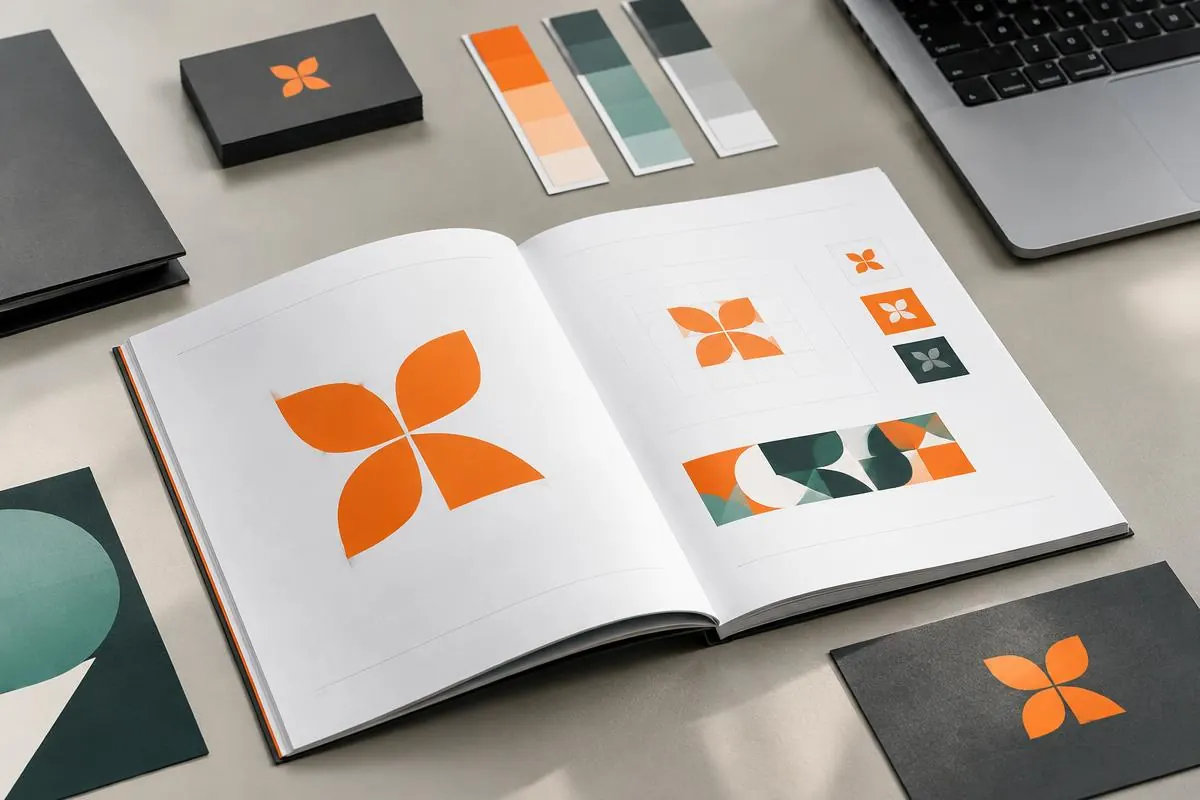
A sparkle, robot or gradient may signal a category but rarely explains why someone should choose your product. Explore a visual cue rooted in the task: organising information, connecting evidence or simplifying a workflow. Test it alongside actual product screenshots and long labels. Keep the identity distinctive without sacrificing readable body text or accessible actions. A brand should work when animated artwork is absent, especially in documentation, email and narrow phone layouts.
Align the first impression with the experience
Kantar's discussion of generative AI branding highlights the opportunity for brand perception alongside delivery. Review whether your product fulfils the impression created by your website. If the brand promises control, visitors should be able to review and correct results. If it promises simplicity, the first task should not require deciphering model settings. These are positioning checks, not evidence that a particular design guarantees adoption. Ask prospective users what they expect before showing them the product.
Build a practical launch package
Start with the product explanation, identity, key website screens, deck and a short demonstration rather than a large collection of disconnected graphics. Give the team editable files and examples for product updates so the brand can evolve as capabilities change. MRL Creation's Brand and Pitch Deck projects show related visual-system and presentation work. Compare relevant deliverables and ask how an identity will handle future product changes. After launch, review qualified enquiries and customer feedback instead of treating visual attention alone as success.